
Training as a Couples Therapist: Is It the Right Next Step

If you’re already working as a counsellor or therapist, there may come a point where you begin to wonder about the next stage in your professional development. This doesn’t always arrive as a clear plan — sometimes it shows up as curiosity, restlessness, or a sense that your work is asking something slightly different of you.
For many practitioners, training to work with couples becomes a natural next step.
What changes when you work with couples?
Working with couples is not the same as working with individuals. When two people come into the room together, the relationship itself becomes part of the work. Patterns that might take months to emerge in individual therapy are often visible very quickly.
There is more complexity to hold, more emotional movement, and often a greater sense of immediacy. This is why couples work requires specific training — not only to understand relational dynamics, but to feel confident and grounded when working with intensity, conflict, and vulnerability.
Most couples counselling training is offered part-time or as short courses, making it possible to train alongside an existing practice. Many therapists begin by introducing couples work gradually, allowing their confidence and experience to develop over time.
Why therapists choose couples counselling training
It brings variety to your clinical work
Adding couples therapy can introduce a different rhythm to your working week. Many therapists value the change in energy that comes with working relationally, alongside individual work. For some, couples work becomes a specialism; for others, it sits alongside individual therapy as part of a mixed practice.
It can be deeply rewarding
Much of couples counselling focuses on communication, understanding, and emotional safety. Supporting people to hear one another differently — often for the first time — can be powerful work. Therapists frequently describe couples work as challenging, but also highly satisfying, particularly when couples begin to relate with greater empathy and awareness.
There is consistent demand for couples therapy
Periods of transition or reflection — such as after Christmas or summer holidays — often lead couples to seek support. Many therapists notice a rise in enquiries at these times, alongside a steady demand throughout the year. For practitioners, this can mean a more balanced and resilient practice.
How training to work with couples fits alongside your current work
Training as a couples therapist does not require an immediate shift in how you practise. Many therapists continue their individual work while slowly integrating couples into their caseload. Training provides a framework and language for understanding relational patterns, while supervision supports the ongoing development of clinical confidence.
Choosing a model of couples therapy is often a personal decision, informed by your own therapeutic orientation and conversations with your supervisor.
Where to begin with couples work training
There are many different models of couples therapy available. One approach is Imago Relationship Therapy, which focuses on unconscious relational patterns and the development of empathy, dialogue, and connection within relationships.
At Northside, we offer Getting Started in Couples Therapy, a two-day introductory course that forms the first stage (Imago Foundations) of training towards becoming a certified Imago therapist. The course is designed for practising counsellors and therapists who are curious about couples work and want a solid, experiential introduction.
If you’ve been wondering whether couples counselling might be part of your professional future, this may be a useful place to begin. Often, professional development is less about changing direction — and more about deepening how we work.
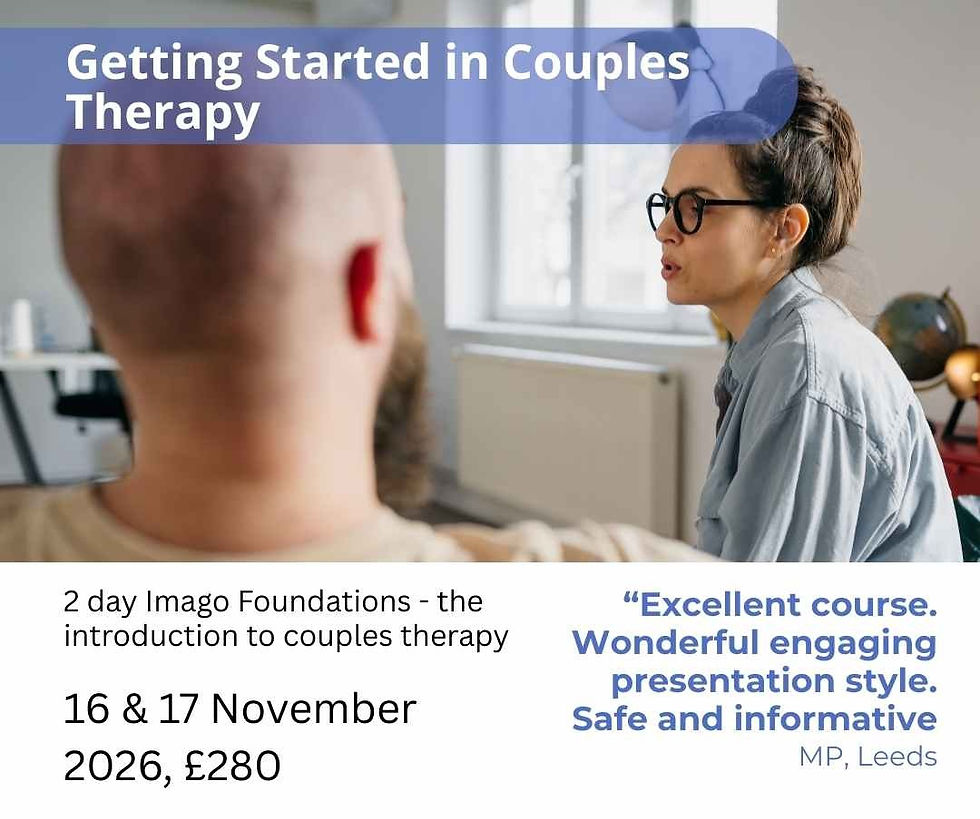
Now taking bookings for our November 2026 in-person course with trainer Ian Tomlinson.
Click here for more information.


Comments